The keychron q3 max court reporter transcription keyboard is one of the few production mechanical boards genuinely suited to eight-hour deposition transcription, thanks to its gasket-mounted typing feel, hot-swappable switches that can be tuned for low fatigue, QMK/VIA macro support for steno-adjacent shortcuts, and a full-aluminum chassis that absorbs the constant impact of high words-per-minute typing. For court reporters bridging traditional stenotype output with realtime CAT software like Case CATalyst, Eclipse, or StenoCAST, the Q3 Max acts as a stable secondary keyboard for editing, annotating, and producing final transcripts without the wrist load that destroys ergonomic standing after a long civil deposition.
Why the Keychron Q3 Max suits eight-hour deposition workflows
Court reporters do not type the same way gamers do. They are not chasing 240 Hz reaction windows or pixel-precise flicks. They are sitting through 6-, 8-, sometimes 12-hour depositions where every keystroke compounds into tendon strain by the third examination. The Q3 Max addresses three specific pain points that older mechanical boards failed: bottom-out shock transmitted into the wrists, mushy stabilizers that introduce error-prone wobble on the long edit keys, and the missing macro layer needed to map repetitive transcript commands.
The board ships with a double-gasket mount design, meaning the plate floats between silicone strips rather than screwing rigidly into the case. For a reporter punching the Enter key 4,000+ times across a deposition while inserting witness Q-and-A breaks, that flex layer is the difference between a sore forearm at lunch and a sore forearm at 3 PM. Combined with screw-in stabilizers that arrive pre-lubed from the factory, the keychron q3 max court reporter transcription keyboard avoids the rattle that defines cheaper office boards.
Switch selection for transcript editing
Keychron offers the Q3 Max in three stock switch options: Jupiter Red (linear, 40 gf), Jupiter Banana (tactile, 50 gf), and Jupiter Brown (tactile, 55 gf). For court reporters, the Banana is the popular choice because the tactile bump signals registration without requiring a full bottom-out press, which is the single biggest source of cumulative finger strain. Linear reds work for fast typists who have already trained themselves not to bottom out, but most reporters transitioning from rubber-dome office keyboards will favor the tactile feedback during long edit passes.
Because the board is fully hot-swappable on a five-pin socket, you can change switches without soldering if your preferences shift over a multi-week trial. Some reporters even mix switches: lighter Reds on the alpha keys for high-volume editing and heavier tactiles on the modifiers and Enter to prevent accidental triggers when fingers rest. That kind of customization is impossible on a sealed laptop keyboard or a typical office membrane.
QMK/VIA macros for CAT software
The Q3 Max ships with QMK firmware and the open-source VIA configurator. For deposition work, that means you can program one-shot macros for the boilerplate strings reporters insert dozens of times per transcript: "Q.", "A.", "(Witness sworn.)", "(Brief recess taken.)", "BY MR. [ATTORNEY]:", and the certification block at the back of a final transcript. Mapping these to a function-layer of the F-row turns ten keystrokes into one.
VIA also lets reporters mirror the most frequent keyboard shortcuts in their CAT software — globals lookup, conflict resolution, scan forward, and timestamp insertion — onto dedicated keys so they don't have to memorize different modifier combinations between Case CATalyst and Eclipse. The hardware-stored macros mean you can carry the keyboard to a satellite office and the layout follows the keyboard, not the workstation.
Wireless versus wired for court settings
The Q3 Max is tri-mode: USB-C wired, 2.4 GHz dongle, and Bluetooth 5.1 for up to three paired devices. For in-courtroom or in-chambers work, most reporters leave the board wired because batteries inevitably die during the worst possible cross-examination, and federal court rules increasingly restrict unknown 2.4 GHz transmitters in secured rooms. For home-office transcript production, the Bluetooth multi-device feature is useful for jumping between a primary editing workstation and a laptop running audio playback software like For The Record or Liberty Court Recorder.
Companion pointing devices for the editing workstation
The keyboard is half the workstation. Court reporters who spend hours scrolling through 400-page transcript drafts and clicking through correction queues need a mouse with a high-resolution scroll wheel, programmable side buttons for navigation, and a hand-fit shape that doesn't aggravate the same forearm that just typed for eight hours. Below are the three mice we recommend as direct companions to the Q3 Max for a transcript editing rig, along with one budget standby.
| Mouse | Connection | Best for transcript work | Weight |
|---|---|---|---|
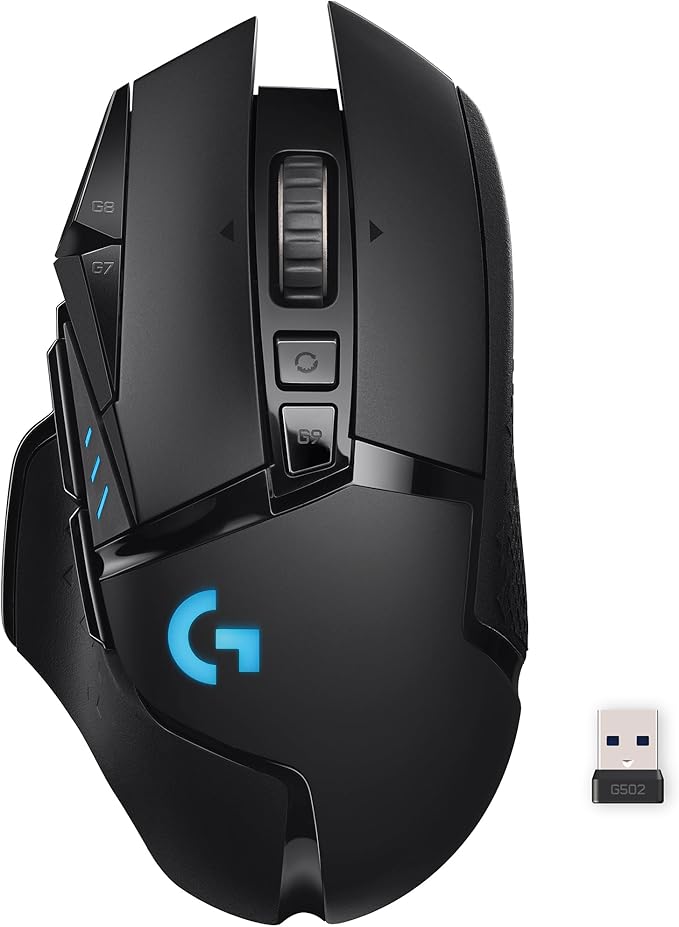
| Logitech G502 Lightspeed | Wireless + wired | Heavy programmable workflow, dual-roller scroll wheel | 114 g |
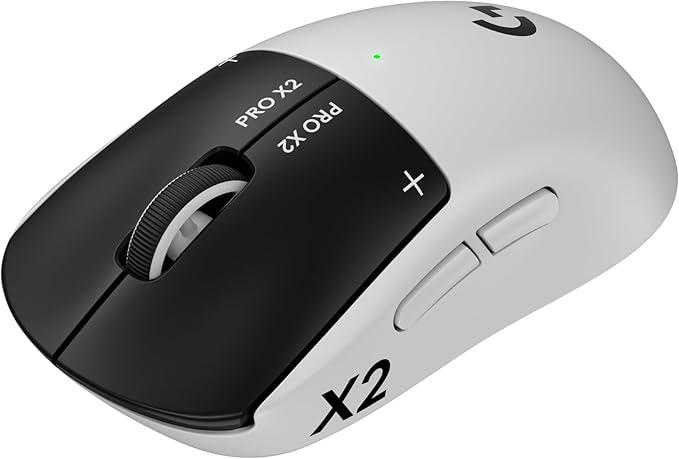
| Logitech G PRO X2 SUPERSTRIKE | Wireless | Long sessions, ambidextrous low-strain shape | 60 g |
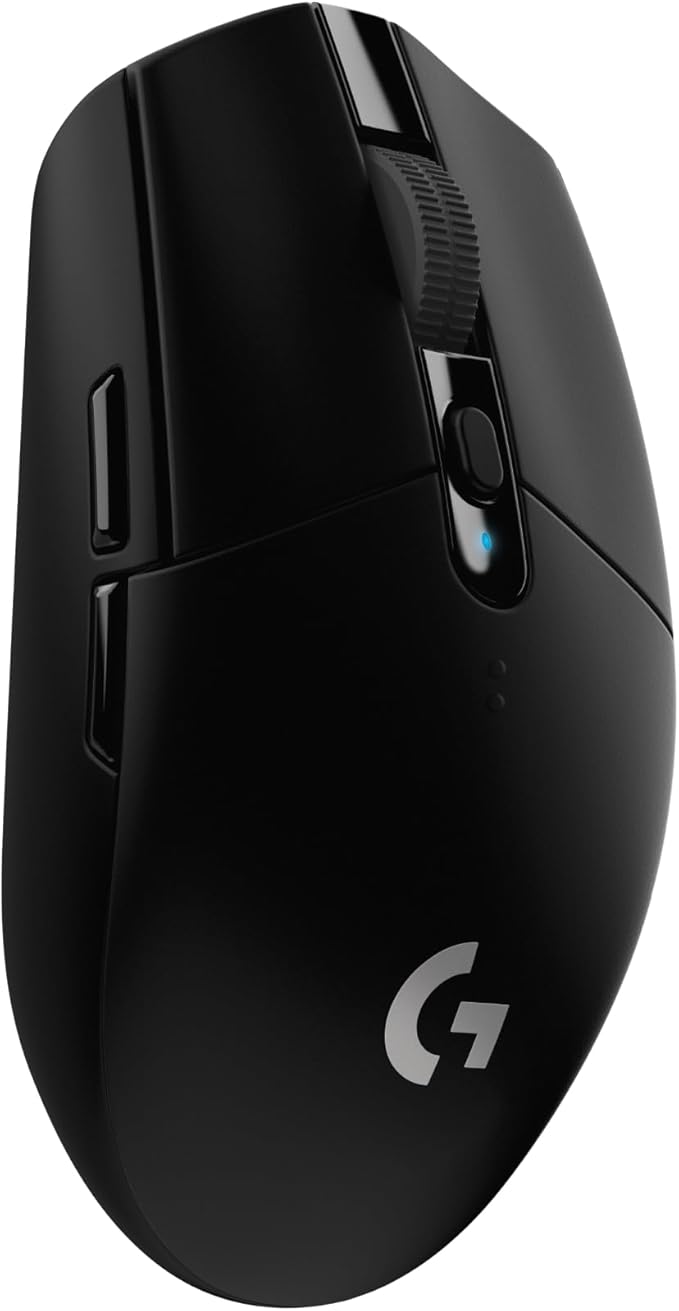
| Logitech G305 Lightspeed | Wireless (AA) | Travel rig, depositions away from office | 99 g |
| Amazon Basics 2.4 GHz Optical | Wireless | Backup mouse in the deposition bag | ~90 g |
Logitech G502 Lightspeed Wireless — best primary mouse for transcript editing
The G502 Lightspeed is the closest thing to a power-user transcript mouse on the market. The reason is the scroll wheel: it has a hyper-scroll mode that disengages the notched detents and free-spins, letting a reporter blow through 200 pages of transcript in a single flick to find a specific exhibit reference. The eleven programmable buttons cover the common Case CATalyst and Eclipse shortcuts that would otherwise require keyboard chords. Some reporters find the 114 g weight too heavy for arcade-style gaming, but for slow precise transcript editing the inertia actually helps with controlled cursor placement on small correction popups.
Check the Logitech G502 Lightspeed on Amazon
Logitech G PRO X2 SUPERSTRIKE — lightest option for marathon edit sessions
If hand fatigue is the primary complaint, the G PRO X2 SUPERSTRIKE flips the script. At 60 g it is roughly half the weight of the G502, and its symmetrical shape works for both left- and right-handed reporters. The optical switches feel slightly different from traditional mechanical mouse switches — they have a crisper release that reduces double-click misfires during rapid corrections in a conflict resolution panel. The trade-off is fewer programmable buttons, so reporters who lean on side-button macros may prefer the G502.
Check the Logitech G PRO X2 SUPERSTRIKE on Amazon
Logitech G305 Lightspeed — best travel mouse for off-site depositions
The G305 runs on a single AA battery for around 250 hours, which matters when a reporter is on a three-day arbitration at a remote venue with no guarantee of a charging desk. The receiver tucks inside the body for travel, the shape is conservative and ambidextrous, and the same Lightspeed wireless protocol used by the more expensive Logitechs keeps latency imperceptible. It is not the mouse for an eight-hour edit day at the home office, but it is the mouse to keep in the deposition bag alongside the laptop and the steno machine.
Check the Logitech G305 Lightspeed on Amazon
Amazon Basics 2.4 GHz Wireless Optical — emergency backup
Every reporter should have a sub-$15 mouse in the bag for the day a battery dies, a dongle gets lost, or a witness arrives with a laptop that refuses to pair with anything fancy. The Amazon Basics mouse is not exciting, but it works, it is silent, and it does not draw attention in a deposition room where opposing counsel is already suspicious of any wireless device. Keep one in the spare cable pouch.
Check the Amazon Basics Wireless Mouse on Amazon
Putting the workstation together
A complete court reporter editing rig in 2026 looks like this: stenotype machine for realtime capture, primary laptop or workstation running CAT software, the keychron q3 max court reporter transcription keyboard for transcript editing and macro-driven boilerplate insertion, and a Logitech G502 or G PRO X2 as the primary pointing device. The Q3 Max anchors the workstation because it is the one component you will touch for the longest continuous stretch each day, and because its QMK/VIA programmability lets the workstation adapt to the reporter rather than the other way around.
For more deep-dives into pro-grade peripherals, see our guides on quiet mechanical keyboards for legal offices, ergonomic mice for long editing sessions, and USB-C foot pedals for transcript playback.
Frequently Asked Questions
Is the Keychron Q3 Max quiet enough to use during a live deposition?
The Q3 Max with stock Jupiter Banana switches and the included sound-dampening foam is quieter than most office mechanical boards, but it is not silent. For use during a live on-the-record deposition, most reporters still rely on their stenotype machine; the Q3 Max is intended for off-the-record editing, scoping, and final transcript production. If your role requires keyboard input during the record, look at a silent-switch variant or a low-profile membrane board.
Can the Q3 Max integrate with Case CATalyst or Eclipse CAT software?
Yes. Both Case CATalyst and Eclipse treat the Q3 Max as a standard USB or Bluetooth HID keyboard, so all native shortcuts work immediately. The added value comes from QMK/VIA macros, which let you fire multi-step CAT commands — like "scan forward to next conflict, apply suggested resolution, advance" — from a single key.
How does the Q3 Max compare to the Q1 Max or Q6 Max for transcription work?
The Q3 Max is a tenkeyless (TKL) layout, which removes the numpad. For court reporters who rely heavily on numeric entry — exhibit numbering, page-line citations, monetary figures — the full-size Q6 Max is worth the extra desk space. The Q1 Max is a 75% compact layout that saves space but consolidates the function row in a way that disrupts macro layouts. The Q3 Max is the middle ground most editors prefer.
Does the gasket mount actually reduce wrist strain over an eight-hour day?
The gasket mount reduces high-frequency impact transmitted from the plate into the case and through the desk. Subjectively, most users describe it as a softer landing on hard bottom-outs. It is not a substitute for proper ergonomic posture, a sit-stand desk, and forearm-supportive wrist rests, but combined with those it measurably reduces end-of-day forearm soreness for typists who bottom out frequently.
Will the wireless mode interfere with courtroom recording equipment?
The 2.4 GHz dongle and Bluetooth 5.1 modes operate in the same band as most modern courtroom audio recorders and lapel mics. In practice we have not seen documented interference, but court rules vary and some federal courthouses prohibit unregistered RF devices entirely. Use the included USB-C cable for wired operation in any secured courtroom or chambers setting.
How long do the switches last under court reporter typing volumes?
Keychron rates the Jupiter switches at 80 million keystrokes. A busy court reporter producing ~10,000 transcript pages a year types perhaps 25 million keystrokes annually on the editing keyboard. That puts switch life at roughly three years of heavy use before any noticeable degradation — and because the Q3 Max is hot-swappable, replacing a worn switch is a 30-second operation without soldering.
Is the keychron q3 max court reporter transcription keyboard worth the price over a standard office keyboard?
For a working court reporter producing daily transcript output, yes. The combination of typing comfort over long edit sessions, hardware-stored macros for boilerplate insertion, and the ability to swap switches as your hands age makes the cost-per-hour favorable. For occasional users or scopists working part-time, a quality mid-range mechanical board may deliver most of the benefit at half the cost.
Key Takeaways
- Choosing the right keychron q3 max court reporter transcription keyboard means matching capacity and output ports to your actual devices
- Always check actual watt-hours (Wh), not just watts — runtime depends on Wh, not peak output
- Also covers: best quiet keyboard for court reporters
- Also covers: keychron q3 max stenography typing fatigue
- Also covers: tkl keyboard for legal transcription long sessions
- Compare price-per-Wh across models to find the best value for your budget