Searching for the best thock sounding keyboards under 150 dollars for asmr keyboard typing videos? You want that deep, marbley, satisfying "thock" — not high-pitched plastic clack — without dropping $300 on a custom build. In 2026, the sub-$150 keyboard market has matured dramatically: gasket-mounted boards, foam dampening kits, PBT keycaps, and silent-bottoming linear switches now come stock on pre-builts that would have cost twice as much two years ago. Below we break down the exact build characteristics, switch types, keycap profiles, and recording techniques that turn a regular mechanical keyboard into ASMR-grade audio gold for YouTube, TikTok, and Twitch streams.
What actually makes a keyboard sound "thock" instead of "clack"
Before you spend a dollar, it helps to understand the physics. "Thock" is a low-frequency, rounded, almost wooden sound — like a marble dropped onto a hardcover book. "Clack" is high-frequency, sharp, and plasticky — like dropping a Lego on a desk. ASMR audiences overwhelmingly prefer thock because it sits in a lower frequency band (around 200–800 Hz) that triggers tingles and feels physically satisfying through headphones. Five factors push a keyboard toward thock:
- Case material and weight. Aluminum and high-density plastic absorb resonance; cheap thin ABS rings. Dense FR4 plates and brass weights amplify low-end thock.
- Mounting style. Gasket-mount and top-mount designs give keystrokes flex and a softer landing than tray-mount, lowering pitch.
- Internal dampening. Bottom-case foam, PE foam between PCB and plate, and silicone dampeners kill hollow reverb.
- Switch choice. Linears with longer poles (e.g. HMX, Gateron Oil Kings, Akko V3 Cream Yellow Pro) bottom out with a thicker thunk. Long-pole tactiles like Boba LTs are also thock-friendly.
- Keycap profile and plastic. Thick PBT (1.4mm+) in Cherry or KAT profile sounds deeper than thin ABS in OEM profile. Cherry profile is the ASMR community favorite.
If a keyboard nails four of those five, it will sound great on a condenser mic. If it nails all five, you are in custom-build territory at a pre-built price.
The 2026 sub-$150 thock keyboard checklist
When you shop for the best thock sounding keyboards under 150 dollars for asmr keyboard typing videos, run every candidate through this 60-second filter before adding to cart:
- Is it gasket-mounted or top-mounted? (Tray-mount = pass.)
- Does it ship with foam in the case AND between the plate and PCB? (Both layers matter.)
- Are the keycaps PBT and at least 1.3mm thick? Cherry profile is a bonus.
- Are the stock switches linear with a long pole, or factory-lubed tactiles? (Stock Reds and browns from old generations are usually too clacky.)
- Is there a daughterboard with a detachable USB-C cable? (Cleaner cable strain and better isolation.)
- Is the layout 65%, 75%, or TKL? (Compact layouts produce more uniform acoustics across the board — fewer dead zones to avoid on camera.)
Best 75% gasket-mount picks around $120–$150
This is the sweet spot for ASMR creators. A 75% layout gives you function keys (essential for editing software) while staying compact enough to fit in frame with a microphone arm and your hands. Pre-built boards in this price range from brands like Keychron (Q1 HE, V1 Max), Akko (MOD 008 Pro), and Royal Kludge (R75) ship with double-shot PBT keycaps, two layers of foam, screw-in stabilizers, and pre-lubed linear switches. Plug one in, hit record, and you have publishable ASMR audio without modification. Look for VIA/QMK compatibility if you want to remap keys for editing shortcuts.
Budget thock under $100 — yes, it exists in 2026
If your budget is closer to $80, the Royal Kludge R65, Epomaker TH80 Pro SE, and Akko MOD007B v3 all deliver convincing thock straight from the box. The trade-off versus the $130 tier is typically a thinner case (less mass absorbs less resonance) and slightly less refined stabilizers, which means louder space-bar rattle on camera. Both are fixable with a $15 lube kit and a tape mod (more on that below) — and you will still have $50 left to spend on a microphone. For more options at this price point, see our budget thock keyboards under $100 roundup.
Premium-feeling barebones kits at the $140 ceiling
If you have some patience and want a slightly more custom feel, barebones kits from Womier, NuPhy, and Cidoo at the $140–$150 mark let you choose your own switches and keycaps. Expect 2–3 hours of assembly, but the resulting acoustic profile is more controlled because you pick every variable. The classic ASMR build is HMX Macchiato or Gateron Oil King switches with KBDfans Cherry-profile PBT keycaps — together that runs roughly $90 in parts on top of a $70–$90 barebones kit, keeping you under the $150 ceiling.
The pre-lubed linear switch shortlist for ASMR
If you are picking switches separately, prioritize long-pole linears with factory lube. Top picks under $0.50/switch in 2026: HMX Macchiato (creamy, deep), Gateron Oil King (poppy thock), Akko V3 Cream Yellow Pro (slightly muted, very smooth), and Outemu Cream Yellow Pro V3 (budget thock king at $0.18/switch). For a deeper switch comparison see our linear switches for thock guide.
The free mods that double your thock
Even the best stock keyboard benefits from three 10-minute mods that cost under $5 total:
- Tape mod. Apply 2–3 layers of painter's tape or electrical tape to the back of the PCB. This dampens reverb and adds noticeable thock with zero risk.
- Force-break mod. Cut the plastic bridges between the case and the plate mounts. This isolates plate flex from the case and dramatically lowers pitch on gasket boards.
- Stab tuning. Lube the stabilizer wires with dielectric grease and band-aid mod the housings. Eliminates the metallic ping on space, enter, and shift that ruins ASMR recordings.
If your stock board is even halfway decent, these three mods get you 80% of the way to a custom build's sound.
Recording ASMR keyboard typing videos: the microphone matters as much as the board
You can have the deepest-sounding board in the world and still ship muddy audio if you record on a $30 USB mic. For sub-$150 ASMR-quality recording, target one of three setups:
- Lewitt LCT 040 Match or Rode NT1 Signature + Focusrite Scarlett Solo. Small-diaphragm or large-diaphragm condensers in cardioid pickup, positioned 6–10 inches above the keyboard pointed at the home row. The cleanest signal possible.
- Maono PD400X or Shure MV7+ dynamic mics in USB mode. Dynamics reject room noise (HVAC, neighbors, breathing), which matters more than people realize for ASMR.
- Binaural setup: Two lapel mics or a 3Dio Free Space at ear height, angled toward each side of the board. This is the gold standard for headphone-targeted ASMR but is $300+.
Whatever mic you choose, record at 48kHz/24-bit minimum, place the mic on a boom arm with a shock mount (vibrations through the desk are the silent killer of ASMR audio), and add a pop filter. Read our ASMR microphone setup guide for keyboard typing for the full chain.
Layout, keycap, and lighting tips for the video itself
Audio is half the equation — the video has to look as good as it sounds. Three quick wins:
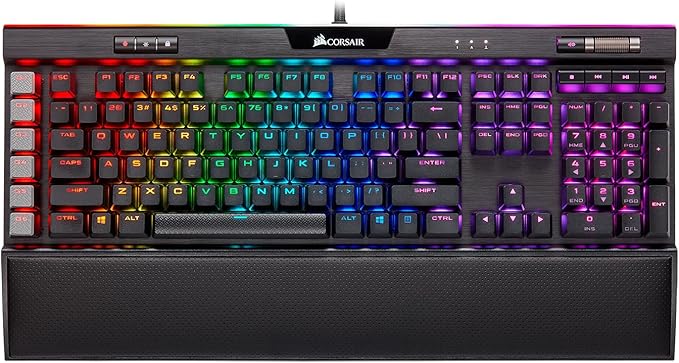
- Cherry-profile keycaps photograph beautifully. The sculpted rows catch light at every angle. OEM profile looks flat on camera. KAT and MT3 are even taller and more cinematic but slightly muffle the thock.
- Pudding-side keycaps are over. RGB-leaking caps look amateur in 2026. Solid-color doubleshot PBT or dye-sub designs (especially GMK-clone colorways like Olivia, Botanical, and Modern Dolch) signal quality.
- Soft side-lighting beats overhead. A 5600K key light at 45 degrees with a fill light on the opposite side eliminates harsh shadows between keys and avoids glare on shiny keycaps. Avoid RGB backlight at max — it creates color bleed on camera and crushes contrast.
Frame the shot at about a 30-degree angle from above, slightly behind your hands. This is the most-watched composition on keyboard ASMR channels because viewers can see both the typing motion and the front of the board.
Common mistakes that ruin ASMR keyboard audio
Even with the right gear, these pitfalls tank otherwise great recordings:
- Recording on a hollow desk. Glass and thin IKEA desks resonate and add a hollow reverb. Use a thick rubber deskmat or a solid wood desk.
- Mechanical keyboard on a metal stand or riser. Vibrations couple into anything rigid. Always use a deskmat with rubber base.
- Stock stabilizers with no lube. The metallic ping on every space-bar press is louder than the switches themselves and is brutal in stereo.
- Compressing audio too hard in post. ASMR audio needs a wide dynamic range. Leave headroom; don't slam the limiter.
- Recording in a square, untreated room. Standing waves create boomy lows that muddy the thock. Throw a blanket over a chair behind you and another off-camera as a temporary acoustic baffle.
Frequently Asked Questions
What is the cheapest keyboard that actually sounds thocky out of the box for ASMR?
In 2026, the cheapest convincing thock comes from the Royal Kludge R65 and Epomaker TH80 Pro SE, both available for around $75–$90. Both ship with PBT keycaps, factory-lubed linear switches, and at least one layer of foam dampening. They are not custom-build quality, but for entry-level ASMR keyboard typing videos they record very well, especially after a $3 tape mod.
Are silent switches good for ASMR videos or do they kill the thock entirely?
Silent linears (e.g. Gateron Silent Yellow, Outemu Silent Lemon) reduce the sharp transient at bottom-out but preserve some low-frequency thock. They are excellent for office or shared-space ASMR creators who cannot record loud sessions, but a true thock fanatic will prefer standard long-pole linears because silent switches use stems with rubber dampeners that absorb part of the satisfying low-end.
Does a wireless keyboard sound different from a wired one for ASMR recording?
The radio versus wired transmission has zero effect on acoustic sound, but the internal battery and Bluetooth module add mass to the case, which slightly lowers pitch and reduces hollow reverb. In blind tests, wireless versions of the same model often sound marginally thockier. The trade-off is occasional battery hum if your mic is positioned too close to the board.
What keycap profile is best for ASMR typing video aesthetics in 2026?
Cherry profile is the runaway favorite for both sound and visual appeal. It is sculpted (each row at a different angle), thick enough to sound deep, and photographs with cinematic shadow detail. KAT and MT3 are taller and more dramatic on camera but slightly muffle the thock. OEM profile, which ships on most stock keyboards, is the worst choice for both audio and aesthetics.
How loud are thock keyboards compared to regular mechanical keyboards for streaming?
Measured at the microphone, a well-built thock keyboard is actually 3–5 dB quieter than a stock unlubed mechanical because the foam and dampening kill the high-frequency clack that microphones disproportionately pick up. Subjectively the thock board sounds richer at lower volume, which is ideal for streamers who do not want chat asking to turn the keyboard down.
Can I get a thock sound from a hot-swappable keyboard or do I need soldered switches?
Hot-swap is fine and is what we actually recommend for ASMR creators who want to experiment with switches. The sockets add a tiny amount of mass and have no measurable acoustic downside in 2026 designs. The bonus is being able to swap switches without soldering, so you can A/B test HMX Macchiato versus Gateron Oil King in the same board and record both for your audience.
What 65% versus 75% versus TKL layout sounds best for ASMR typing videos?
65% boards have the most uniform acoustics because there is less plate area to flex inconsistently — every key sounds similar. 75% adds function keys with minimal acoustic compromise. TKL boards are visually impressive but have larger plates that can develop dead zones (typically around the arrow cluster) where keys sound thinner. For pure ASMR, choose 65% or 75%; for streaming where you need shortcut access, 75% is the best balance.
The bottom line
The market for the best thock sounding keyboards under 150 dollars for asmr keyboard typing videos has never been better. A 2026 pre-built gasket-mount 75% with PBT keycaps, foam dampening, and factory-lubed long-pole linears will deliver 90% of the audio quality of a $400 custom build for less than half the price. Add a $3 tape mod, a properly tuned microphone chain, and Cherry-profile keycaps, and you have a setup that will sound and look professional on day one. Spend the rest of your budget on the microphone — it matters as much as the board itself.
Key Takeaways
- Choosing the right best thock sounding keyboards under 150 dollars for asmr keyboard typing videos means matching capacity and output ports to your actual devices
- Always check actual watt-hours (Wh), not just watts — runtime depends on Wh, not peak output
- Also covers: thocky keyboard cheap asmr typing
- Also covers: budget thock board asmr youtube
- Also covers: under 150 thock mechanical keyboard
- Compare price-per-Wh across models to find the best value for your budget